New Trinity study reveals rapid evolution of cancers with shrunken genomes
Posted on: 02 June 2026
Researchers at Trinity have found that a largely overlooked form of cancer evolution, which drives aggressive disease and poor patient outcomes, is far more widespread than previously thought.
Comparing chromosome patterns in these tumours, the team also developed a new method for accurately distinguishing between two leukaemias, which could provide information to better guide patient treatment decisions.
Published in leading journal Genome Medicine, the study analysed genome data from more than 17,000 tumours across 34 cancer types, making it the first large-scale, pan-cancer investigation of extreme chromosome loss, known as “hypodiploidy”.
Cancer cells often carry the wrong number of chromosomes but while much research has focused on those that gain extra chromosomes, far less is known about cancers that lose large amounts of genetic material.
In this study, the researchers found that extensive chromosome loss is more widespread than previously believed and is often associated with highly unstable tumours that are harder to treat. These hypodiploid tumours show instability at all levels of the genome, from the smallest gene changes to doubling of the entire chromosome complement. And, remarkably, they can tolerate and continue to evolve with profound disruptions to their genomes.
In combination, the findings point to a unifying principle: tumours with very different chromosome profiles, from extreme gain to extreme loss, can show similar behaviour when they share a high level of chromosomal instability. In these cancers, it is this underlying instability, rather than the specific pattern of chromosome change, that appears to drive disease progression.
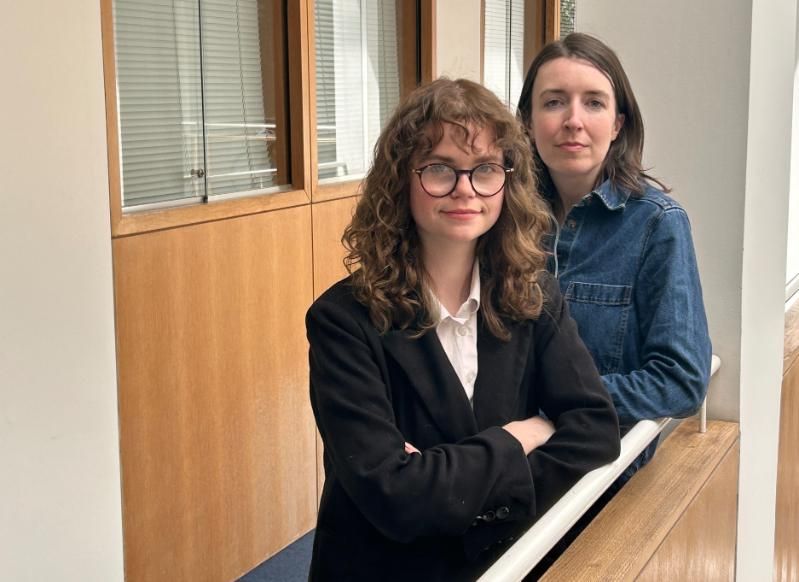
The work was carried out by Dr Elle Loughran (left), Dr Máire Ní Leathlobhair (right), and Prof. Aoife McLysaght from Trinity's School of Genetics & Microbiology.
A new technique for distinguishing between two cancers
The team also identified a distinct subset of cancers, including acute lymphoblastic leukaemia (ALL), kidney chromophobe cancer and adrenocortical carcinoma, that maintain surprisingly stable chromosome-loss patterns over time. These stable “stereotyped” tumours differed markedly from the unstable cancers seen elsewhere in the study and offered important clinical insights.
Using these recurring chromosome patterns, the researchers developed a simple method to distinguish between two forms of ALL that can appear nearly identical under the microscope, but which carry very different prognoses. The approach could help clinicians more accurately classify patients and guide treatment decisions using routine laboratory data.
Improving identification of these cases is important to ensure that patients with aggressive disease are recognised and treated appropriately, while avoiding unnecessarily intensive treatment for patients with more favourable forms of ALL.
What is the potential impact of this research?
For years, cancer scientists have focused heavily on tumours that gain extra chromosomes, which is a long-established hallmark of many cancers. But this study shines a spotlight on the opposite phenomenon: cancers that lose large numbers of chromosomes. The findings suggest these tumours are not rare oddities, but a widespread and clinically important feature of cancer biology that has been largely overlooked.
Additionally, the broader story is that cancer cells face surprisingly few limits on their chromosomal evolution. These tumours can lose huge chunks of their genetic material, continue evolving, and still thrive. Understanding how they tolerate this level of disruption may reveal new vulnerabilities that future therapies could target.
“Our findings could have important implications for diagnosis and patient care,” said Dr Máire Ní Leathlobhair, senior author of the research, from Trinity’s School of Genetics and Microbiology.
“One thing we focused on was leukaemias that can appear very similar in routine chromosome testing but have very different outcomes for patients. By developing a simple way to distinguish these cases using cytogenetic data, our work could help doctors identify high-risk patients earlier and avoid misclassifying aggressive cancers as lower-risk disease or treating lower-risk forms overly aggressively.”
Dr Elle Loughran, lead author from Trinity, added: “The study also strengthens the growing idea that chromosomal instability itself, the ongoing chaos and reshuffling inside cancer genomes, may be one of the key drivers of cancer aggressiveness. That matters because it shifts the focus away from individual mutations alone and toward the broader instability of the cancer genome. In practical terms, this could influence how future cancer therapies are designed and which patients are selected for particular treatments.”
This research was funded by Research Ireland, SFI-CRT in Genomics Data Science, the European Research Council, and the HEA-HCI Pillar 3 Initiative. The paper can be read on the Genome Medicine website.