
Life under the shadow of regeneration in Dolphin House flats
Posted on: 02 June 2026
Everyday life under the shadow of a major regeneration project is the subject of a new research project from Trinity College Dublin.
Entitled ‘The flats are coming down! Yup the Flats’ the project is a collaboration between Dolphin House Community Development Association and researchers at the School of Social Work and Social Policy, Trinity College Dublin.
Built in 1957, Dolphin House is Dublin city’s largest public housing complex comprising 392 homes. The complex has been the subject of a prolonged regeneration process, which was first announced in 2006. Plans for phase two, due to start in 2027, involves the removal of the six flat buildings and the construction of 600 new homes.
The sociological study of everyday life in the Dolphin House documents through film, photography, art and creative writing how residents experience housing, community, tenancy, and regeneration in their daily lives. A permanent community artefact has also been produced capturing the spirit of a unique community living through a period of profound regeneration and change.
A research report also documents how prolonged and uncertain regeneration processes have had a “destabilising effect” on everyday life in Dolphin House.
“Dolphin House is a place where generations of families have lived, where there are stories, memories and generational bonds. This research study creates a record of a unique public housing community that has been living under the shadow of regeneration. It will serve as a repository for future generations of this strong, neighbourly and proud community.” explains Joe Whelan, Assistant Professor at Trinity’s School of Social Work and Social Policy.
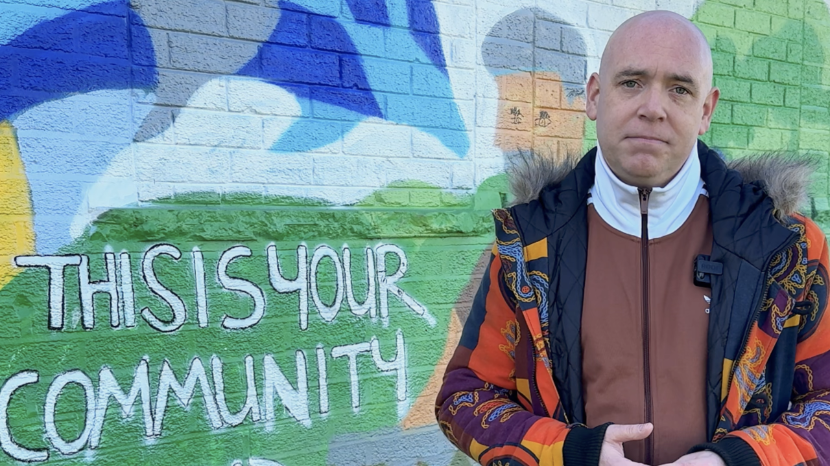
Joe Whelan, Assistant Professor at Trinity’s School of Social Work and Social Policy
“The formal research report also captures how delays, unclear timelines and repeated consultation without clear outcomes have produced ongoing stress, insecurity and a sense of powerlessness among residents. Regeneration has been experienced by this community not as a single event, but as a long-term condition of uncertainty that disrupts daily routines, family life and future planning.”
What are the policy implications for this study?
The study illustrates clearly that regeneration policy must move beyond a narrow focus on physical delivery to address the social and temporal dimensions of housing change, according to Dr Whelan.
“Regeneration policy must pay attention to everyday life and community rhythms in order to deliver regeneration that is socially sustainable and just. The study calls for health impact assessments to be incorporated into regeneration planning policy. This will allow the risks associated with prolonged uncertainty, displacement, and poor living conditions to be identified and help determine whether prolonged regeneration processes may produce harms that outweigh its intended benefits.”
Creative research techniques
Conducted over six months, the study combines traditional research methods, including interviews, with arts-based creative techniques to produce a rich, community-centred account of life in Dolphin House at a moment of significant change.
Debbie Mulhall, Community Development Worker Dolphin House, who was a member of the project steering committee, said: "Dolphin House residents have always been a very tight-knit community – a community that has a past they are proud of; they are existing in the present, and clinging to hope that we they will have a vibrant future with new quality homes and proper facilities for all.”
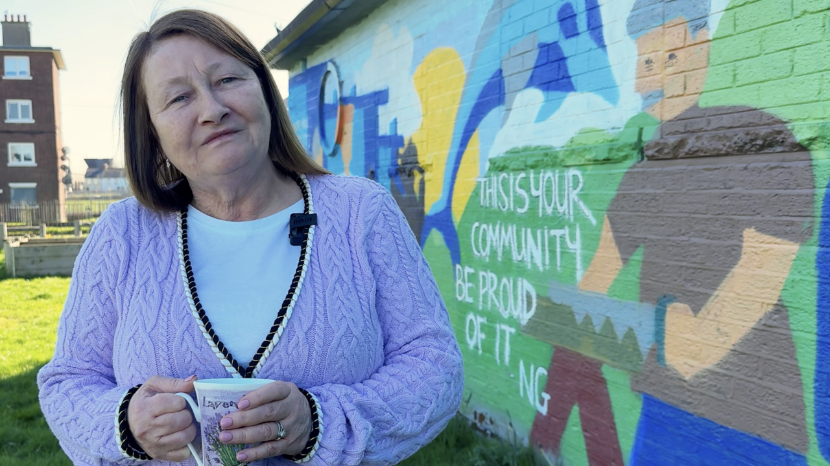
Debbie Mulhall, Community Development Worker Dolphin House
“A lot of people were very interested in sharing their stories as part of this project. Sometimes it’s hard to express what you want to say but this project allowed participants to express themselves through art, poetry and creative writing. Having the community artefact is great. People will be able to look back and say ‘Dolphin House was a good place to live, good people lived there and they really looked out for each other’.”
Not everyone wants to be involved in a research study by being interviewed, explains Dr Whelan. Using non-tradition research methods such as creative arts practice fosters inclusion and allows a broader range of people to be involved in a piece of research.
The flats are coming down! Yup the Flats: A sociological exploration of life in the Dolphin House flat complex using arts based creative methods is funded by Research Ireland under the New Foundations programme.
See the project website for more information.